You're Not a Race Car Driver, So Why Does Your Chair Cost More Than a Used Honda?
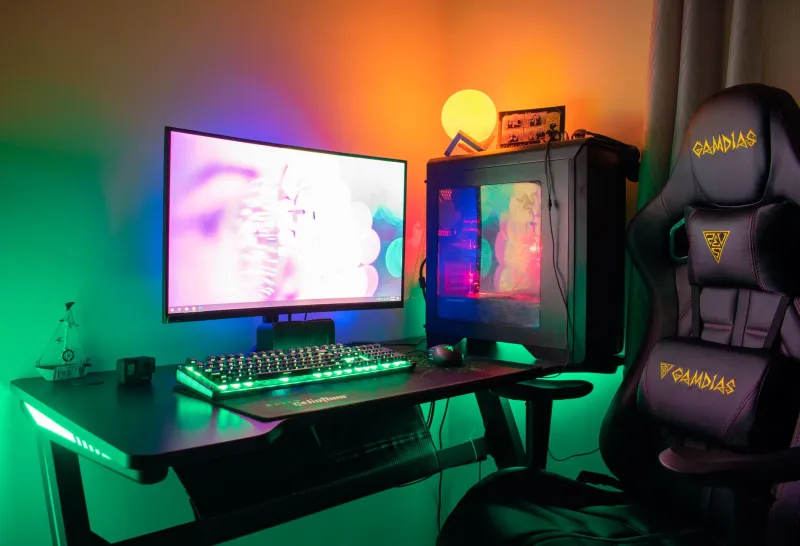
Let's set the scene. You've just rage-quit your third ranked match in a row, your back hurts, and your current chair — a $45 folding disaster you inherited from a garage sale — is slowly consuming your spine. You open a browser tab and type "gaming chair." Forty-five minutes later, you're $479 poorer, the proud owner of something that looks like it was ripped directly out of a Ferrari and bolted to a set of caster wheels.
Welcome to the gaming furniture industrial complex. Population: you, your crushed lumbar, and a whole lot of marketing wizards laughing into their ergonomic office chairs.
The Bucket Seat Backstory Nobody Asked For
Here's a fun piece of trivia that will absolutely ruin your next chair purchase: the iconic racing-seat aesthetic that defines the gaming chair industry was essentially borrowed wholesale from motorsport and then... applied to people who sit very still for eight hours. The design language — aggressive bolstering, high side wings, the signature two-tone colorways — exists in actual race cars to keep drivers from flying sideways during 150 mph turns. You are not taking 150 mph turns. You are eating Doritos and arguing about patch notes.
The first major gaming chair brands emerged in the mid-2000s, and they were initially targeted at esports professionals and LAN tournament crowds. That's a reasonable niche. But somewhere along the way, the marketing machine realized that if you could convince every teenager with a PC that a gaming chair was essential gear — like a headset or a mouse — you'd have a license to print money. And print money they did.
Today, the global gaming chair market is worth well over $1 billion annually, and it's growing. That's billion with a B. For chairs.
The Side-by-Side Nobody Shows You
Here's where it gets genuinely uncomfortable (pun very much intended). Take a mid-range gaming chair — something around $350 to $450 from one of the big recognizable brands. Now look at what you're actually getting: a steel frame, high-density foam padding, a PU leather or fabric cover, adjustable armrests, a reclining mechanism, and a lumbar pillow that's basically just a small throw pillow with a logo on it.
Now go look at a mid-range office chair from a reputable ergonomic brand in that same price range. What you'll find is often more adjustability, better lumbar support that's actually built into the chair structure (not strapped on like an afterthought), breathable mesh that doesn't turn your back into a sweaty greenhouse, and designs that were engineered with actual input from occupational therapists and ergonomics researchers.
The dirty secret? Several furniture industry insiders have pointed out that gaming chairs and budget office chairs often share nearly identical internal components — same foam densities, same recline mechanisms, sometimes even the same factory floors in China. The difference is the shell design, the color scheme, and the branding. Oh, and about $150 to $200 in markup.
One furniture designer who asked to remain anonymous (because apparently the gaming chair discourse is that serious) put it bluntly: "The structural difference between a $400 gaming chair and a $180 office task chair is often minimal. You're paying for aesthetics and brand association. That's it. That's the whole thing."
The RGB Effect and Other Masterclasses in Upselling
Of course, no conversation about gaming gear pricing is complete without acknowledging the RGB industrial complex. Because yes, some gaming chairs now come with built-in LED lighting. Your chair glows. Why does your chair glow? Nobody knows. Your back certainly doesn't know. Your spine has never once asked for ambient lighting.
But here's the genius of it: RGB lighting has become so deeply associated with "gamer" identity that its presence alone justifies a price bump in the consumer's mind. Add some LEDs, throw on a logo that looks like it was designed during an energy drink-fueled fever dream, and suddenly a $160 chair becomes a $420 "gaming cockpit experience."
The same principle applies to every "gaming" product category, by the way. Gaming desks. Gaming mousepads (they're just... big mousepads). Gaming water bottles. At some point you have to ask whether the label is describing a product's function or just its target audience's wallet.
So Is There Anything Redeemable Here?
In fairness — and we're nothing if not fair here at Aleloo — gaming chairs aren't entirely without merit. For users who genuinely prefer the high-back, heavily bolstered design for posture support, some models do deliver on comfort. People who run long streaming sessions or competitive gaming marathons often appreciate the neck pillow and the ability to fully recline during breaks.
Also, for the aesthetic crowd? Look, your setup is your setup. If having a chair that matches your RGB keyboard and your LED desk lamp brings you joy, that is a completely valid way to spend your money. Joy is real. Vibes are real.
But the key word there is informed. Know what you're paying for. If you're dropping $450 on a chair because you genuinely love how it looks and it fits your setup, that's a choice. If you're dropping $450 because you genuinely believe it's ergonomically superior to a $200 office chair — well, the research largely disagrees with you.
What Should You Actually Buy?
If your back is the priority (and it should be, because you only get one spine and it has to last you a lifetime of gaming), ergonomics researchers and physical therapists consistently recommend looking at mesh office chairs from brands like HON, Sihoo, or even the budget lines from Steelcase and Herman Miller if you can stretch the budget. These chairs were designed around human biomechanics, not around looking cool on a Twitch stream.
If the aesthetic matters as much as the comfort — totally valid — then at least do your comparison shopping. Read actual user reviews from people who've sat in the chair for six-plus hours, not just unboxing videos. Check the foam density specs. Ask whether the lumbar support is adjustable in height, not just in pressure.
And maybe, just maybe, consider whether the $200 you save by skipping the racing stripes could go toward a decent monitor stand, a better desk, or — wild idea — your actual rent.
The Bottom Line
The gaming chair industry is a masterclass in lifestyle branding. It took a motorsport aesthetic, applied it to a completely stationary activity, and convinced millions of people that sitting like a Formula 1 driver would make them play like one. It's honestly kind of impressive in a "wow, capitalism really said let's go" kind of way.
Your back deserves good support. Your wallet deserves honesty. And you deserve to know that the most important thing about your gaming setup isn't whether your chair matches your LED strips — it's whether you can sit in it for four hours without needing a chiropractor.
Choose wisely. Game harder. And maybe, just maybe, let the race car cosplay stay on the track.