You're Losing a Bidding War Against a Robot for a Piece of Painted Plastic — Here's Why
At some point in the last decade, buying a toy became a competitive sport.
Not metaphorically. We mean the whole setup: the pre-registration, the drop time circled on your calendar, the browser tabs staged and ready, the Discord alerts configured so your phone buzzes the moment the listing goes live. You have prepared. You have done everything right.
The item sells out in ninety seconds. You were in the queue. You still didn't get one. And now the same item is listed on eBay for four times retail, sold by an account with 6,000 positive feedbacks and a very suspicious number of identical listings.
Welcome to the limited-edition collectibles economy — a system so thoroughly optimized for manufactured frenzy that it barely resembles shopping anymore. It's closer to a financial market, complete with its own speculators, arbitrageurs, and price manipulation, except the underlying asset is a vinyl figure with a bobblehead and a brand tie-in.
The $2 Problem
Let's start with the number that makes the whole thing feel slightly unhinged: production cost.
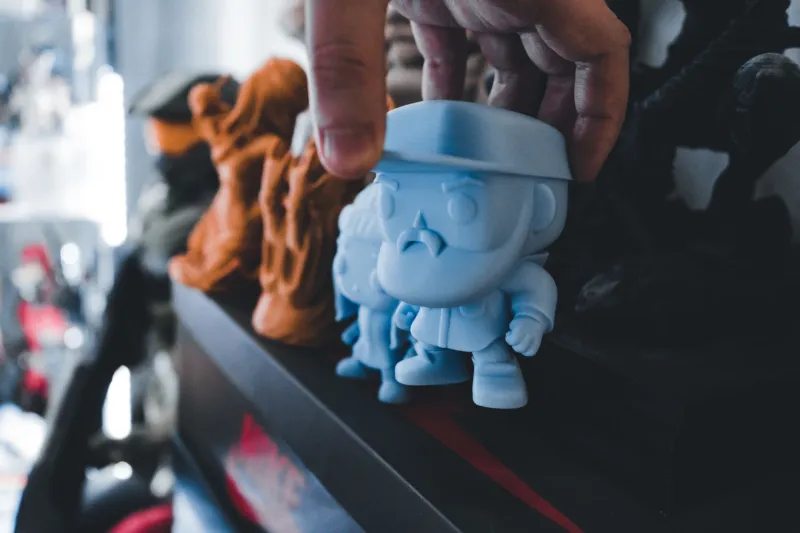
A standard Funko Pop vinyl figure — one of the most ubiquitous collectibles on the market — costs somewhere between $1.50 and $3 to manufacture, depending on complexity and production volume. They retail for $10 to $15. That's already a healthy markup. But the "exclusive" or "limited" variant of that same figure? It might retail for $25 to $45. And on the secondary market, depending on the IP and how aggressively the scarcity was engineered, it might fetch $150, $300, or more.
The physical object hasn't changed. The manufacturing cost hasn't changed. What changed is the number printed on the production run and the marketing machinery deployed to make you feel like missing it would be a genuine loss.
"Scarcity is the product," one industry analyst who tracks the collectibles market told us bluntly. "The item is almost secondary. What you're selling is the feeling of exclusivity, and that feeling is completely manufactured. It's one of the most effective psychological levers in retail."
How Bots Ate the Drop Economy
The collectible drop model — a limited quantity released at a specific time — was probably inevitable once the internet made simultaneous global access to retail possible. What nobody fully anticipated was how quickly automated purchasing software would make human participation essentially futile.
Bot networks designed to snipe limited-release products have been a documented problem in sneaker culture for years. The same infrastructure has migrated wholesale into gaming merch, vinyl figures, trading cards, and any other category where artificial scarcity creates resale opportunity.
These aren't crude scripts running on someone's laptop. Modern scalping bots are sophisticated services, often sold as subscriptions, with features like automatic cart filling, checkout acceleration, proxy rotation to avoid detection, and real-time monitoring of multiple storefronts simultaneously. A single bot operator can effectively "purchase" hundreds of units of a limited item in the time it takes a human to navigate a CAPTCHA.
Data from bot-detection firm Kasada suggests that during major limited-release events in the sneaker and collectibles space, bot traffic can account for anywhere from 40% to over 90% of checkout attempts on unprepared retail platforms. Some drops are effectively over before the page fully loads for most legitimate buyers.
The result is a two-tiered market: the retail price, which almost no casual fan can access, and the secondary market price, which reflects what people are actually willing to pay in the absence of alternatives.
The Platforms That Profit Either Way
Here's where the economics get genuinely interesting, and by interesting we mean a little bit infuriating.
Secondary market platforms like StockX, COMC, and various eBay categories don't just passively host resale transactions — they actively benefit from and, critics argue, help normalize the resale premium culture. StockX in particular has positioned itself as a "stock market for stuff," complete with price charts, market trend data, and the language of investment applied to physical collectibles.
This framing isn't accidental. When you can look at a chart showing a limited gaming figure "appreciating" 200% over eighteen months, you're not just looking at a toy. You're looking at an asset. And assets feel different from toys — more serious, more legitimate, more worth paying inflated prices to acquire.
The brands themselves occupy a complicated position. On one hand, sell-out drops generate enormous publicity and social proof. A collectible that "sold out instantly" is, by definition, desirable, and desirability is exactly what these brands are selling. On the other hand, fans who can't access product at retail price and refuse to pay resale premiums are fans who feel excluded from a community they want to be part of — and that resentment accumulates.
"The brands know the bots exist," one longtime collector and community moderator told us. "They have the technology to slow them down significantly if they wanted to. Some of them genuinely don't want to, because the sell-out story is worth more to them than the fan goodwill."
So Why Are We Still Here?
This is the question that should probably end the whole enterprise, and somehow doesn't.
Collectors — real ones, not bot operators — are not irrational. They understand, on some level, that the scarcity is manufactured. They know the secondary market is rigged. They've been burned by drops before and they'll be burned again. And yet the hobby persists, grows even, with new entrants arriving constantly.
Part of it is genuine community. The collector spaces around specific IPs or figure lines are often warm, knowledgeable, and fun to inhabit. Part of it is the object itself — there is real craft in some of these pieces, and the joy of displaying something you love in physical form is legitimate and human.
And part of it, honestly, is the game. The drop, the hunt, the moment you actually secure something you wanted — that dopamine hit is real, and it's been carefully engineered to be maximally addictive.
"I know it's kind of ridiculous," one collector in Chicago told us, gesturing at a shelf of meticulously arranged figures. "But I also know I'm happy when I look at this shelf. Is that worth anything?"
Maybe. Just maybe check whether you're buying from a bot first.
Aleloo does not endorse paying $200 for painted plastic. We do, however, fully endorse the shelf display aesthetic. Very clean. Very good.